Key Developments Driving India's Renewable Energy Expansion
The article examines the major developments driving India's renewable energy expansion, highlighting the role of solar power, energy storage, AI, smart grids, domestic manufacturing and supportive government policies in shaping the country's clean energy future.
India is witnessing one of the most remarkable energy transitions in the world. Driven by a robust and growing economy that demands more electricity and an urgent need to reduce its carbon footprint, the country has committed to anchoring its development in renewable energy. Solar, wind, hydro, biomass, and hybrid energy solutions are reshaping India’s energy landscape while simultaneously generating significant business and industrial opportunities.
Government policy, technological innovation, domestic manufacturing, and private-sector investment have collectively made renewable energy not only a flourishing industry in India but also an increasingly influential one on the global stage. As India works to achieve its climate and energy security objectives, several developments are contributing decisively to the green energy transition.
Renewable Energy Expansion: A New Age
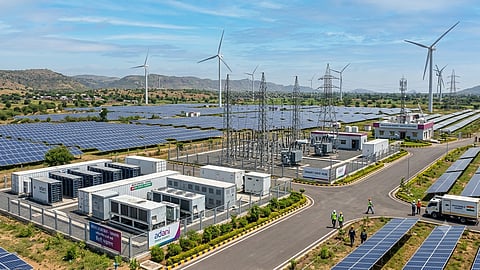
India has emerged as one of the fastest-growing renewable energy markets in the world, driven not only by the need to reduce fossil fuel dependence but by a broader ambition to strengthen energy security, create employment, promote domestic manufacturing, and achieve sustainable economic growth. The growth is being fuelled by large-scale solar installations, expanding wind capacity, rooftop and utility-scale solar parks, increasing energy storage investment, smart grid advancement, supportive government policy, and rising awareness among both industry and households. Together, these trends are transforming India’s power generation sector.
1. Solar Energy: The Dominant Force in Renewable Growth
Solar energy continues to lead India’s renewable energy revolution. Declining costs of photovoltaic technology, expanded manufacturing capacity, and supportive policy frameworks have made solar one of the least expensive sources of electricity in the country. Deployment spans utility-scale parks, rooftop installations, agricultural solar pumps, commercial and industrial systems, floating solar projects, and canal-top installations.
Solar systems are now becoming commonplace across residential societies, educational institutions, hospitals, manufacturing units, warehouses, shopping complexes, and government buildings. As electricity prices rise, businesses are increasingly turning to solar to reduce operating costs and meet sustainability commitments.
2. Modern Solar Inverter Technology
While solar panels generate electricity, inverters are the critical components that convert and manage that power for practical use. Modern solar inverters have evolved considerably, now offering efficient energy conversion, smart Maximum Power Point Tracking (MPPT), remote monitoring, mobile app integration, grid connectivity, hybrid battery integration, AI-based diagnostics, and performance analytics. These capabilities improve energy yield, reduce maintenance costs, and enhance system reliability — making advanced inverter technology a key enabler of India’s energy development.

3. Hybrid Energy Systems Gain Traction
Hybrid energy systems — combining solar generation, battery storage, grid supply, and diesel backup where required — are becoming increasingly popular. By integrating multiple energy sources, hybrid systems improve supply reliability and reduce dependence on conventional energy resources. Businesses and facilities that experience frequent power interruptions stand to benefit particularly from such installations, which provide an uninterrupted power supply even during grid outages.
4. Energy Storage: A Critical Enabler
Renewable energy generation is inherently weather-dependent. Energy storage technologies address this challenge by capturing surplus electricity and releasing it when generation falls short. Advances in lithium-ion batteries, Lithium Iron Phosphate (LiFePO4) cells, Battery Energy Storage Systems (BESS), grid-scale storage, and home backup systems are improving both the economics and reliability of storage solutions.
Storage systems contribute to load levelling, grid stabilisation, power backup, optimised solar utilisation, and greater energy independence. As battery costs continue to fall, energy storage is expected to become a standard component of new renewable installations across the residential, commercial, and utility segments.
5. Digital Monitoring and Energy Management
The digital revolution has transformed renewable energy management. Modern platforms give consumers real-time visibility into energy production, consumption, grid exports, savings, system health, and alerts. Cloud-based monitoring tools and mobile applications enable remote system oversight, while AI-driven predictive maintenance and IoT integration are improving operational efficiency and reducing downtime across installations of all scales.
6. Government Initiatives Accelerating Renewable Adoption
Several government programmes have been instrumental in shaping India’s renewable energy trajectory. The PM Surya Ghar: Muft Bijli Yojana scheme incentivises consumers to install rooftop solar systems. The Production-Linked Incentive (PLI) scheme promotes domestic manufacturing of solar cells, modules, and components. Renewable Purchase Obligations (RPOs) require electricity distribution utilities and large consumers to source a specified proportion of their energy from renewable sources, ensuring sustained market demand. Meanwhile, Green Open Access Guidelines are making it easier for businesses to procure green energy directly.
7. Domestic Manufacturing and Energy Security
The Make in India initiative has placed growing emphasis on domestic manufacturing across the renewable energy value chain, encompassing solar panels, inverters, mounting structures, electrical accessories, and energy storage systems. The advantages are tangible: reduced dependence on imports, stronger quality control, faster product delivery, job creation, and greater supply chain resilience. A robust domestic manufacturing base is increasingly regarded as a strategic priority for India’s long-term energy security.
8. Smart Grid Upgradation
As renewable energy penetration increases, grid infrastructure must evolve to keep pace. Smart grid technologies — including automated distribution, smart meters, advanced forecasting, grid automation, demand response systems, and digital substations — are essential for managing decentralised and variable renewable generation. These upgrades enhance grid stability, energy efficiency, power quality, and the overall capacity to absorb a higher share of renewable supply.
9. Electric Vehicles as a Renewable Energy Catalyst
The rapid growth of electric vehicles in India is complementing the country’s renewable energy ambitions. Solar-powered EV charging stations, smart charging infrastructure, battery innovation, and the broader shift to renewable-powered transport are creating strong synergies between the mobility and energy sectors. As EV adoption scales, demand for clean electricity will grow — further strengthening the case for renewable investment.
10. Commercial and Industrial Sector Driving Investment
Companies across manufacturing, textiles, pharmaceuticals, IT parks, logistics, hospitality, and retail are making substantial investments in renewable energy. The motivations are clear: lower electricity bills, protection against tariff increases, ESG compliance, carbon footprint reduction, improved brand reputation, and greater operational efficiency. Rooftop solar for commercial and industrial applications has become one of the fastest-growing segments of renewable energy in India.
11. AI and Automation Enhancing Renewable Performance
Artificial intelligence is progressively transforming the renewable energy sector. Applications include energy generation forecasting, predictive maintenance, proactive fault detection, performance optimisation, demand forecasting, and automated diagnostics. AI-driven systems improve plant efficiency, reduce maintenance costs, and minimise downtime — making renewable assets more reliable and economically productive across their operational lifespans.
12. Rising Investment in Renewable Infrastructure
Domestic and foreign investment in India’s renewable energy sector has grown substantially, flowing into solar parks, wind farms, hybrid systems, power transmission infrastructure, battery storage, green hydrogen, and manufacturing facilities. Private companies, financial institutions, and international investors have all increased their exposure to India’s energy transition, reflecting growing confidence in the sector’s long-term trajectory.
Challenges That Still Require Attention
Despite India’s considerable progress, a number of challenges persist. Grid integration of variable renewable energy remains technically complex. Land acquisition for large-scale projects continues to create delays. The cost of energy storage, while falling, remains a constraint for smaller players. Access to financing for mid-sized and smaller renewable developers is uneven. Skilled labour availability lags behind the pace of deployment. And the question of end-of-life management — recycling of solar panels and batteries — is becoming increasingly pressing as early-generation installations reach the end of their useful lives. Addressing these issues will be essential to sustaining the momentum of India’s transition.
Conclusion
India’s renewable energy journey is about far more than an energy transition — it represents a fundamental shift in how the country’s economy and infrastructure will develop in the decades ahead. Advances in solar technology, intelligent inverters, energy storage, AI-driven monitoring, smart grid infrastructure, and a supportive policy environment have together created the conditions for cheap, reliable, and clean electricity generation at scale.
The next decade will see renewable energy integrated ever more deeply into homes, industries, agriculture, transport, and urban infrastructure. Companies and institutions that invest in innovation, domestic manufacturing, and consumer-centric solutions will play a defining role in shaping this transformation — and in determining how quickly India’s clean energy ambitions become reality.
Author Bio
Mr Sagar Sojitra is the Founder & CEO of Vsole Solar Energy Pvt. Ltd., where he has played a pivotal role in establishing the company as a trusted provider of innovative solar energy solutions in India. With a strong entrepreneurial vision and a commitment to technological advancement, he has led Vsole's growth by delivering reliable, high-performance products for residential, commercial, and industrial applications. Passionate about accelerating the clean energy transition, Mr Sojitra continues to drive the company's focus on sustainability, product excellence, innovation, and long-term value creation for customers.