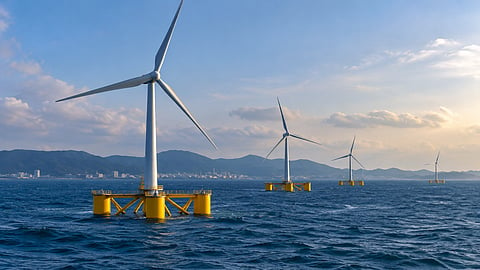

Norwegian energy company Equinor has decided to stop pursuing future offshore wind opportunities in South Korea, marking a strategic retreat from a market it entered in 2014. The company says the decision reflects a shift toward integrated power markets where it already has an established presence, alongside a broader reduction in its geographical footprint. Equinor also says the experience gained in Korea will continue to contribute to its offshore wind capabilities.
The withdrawal comes after years of development work on several Korean offshore wind projects, including floating wind proposals designed for the country's coastal conditions. One of the most prominent was the Bandibuli project, also known as Firefly, planned off Ulsan. Equinor had worked on development, community engagement, permitting and environmental assessment activities while seeking a commercially viable electricity offtake arrangement. The company said it would assess the project's future following a decision by the relevant authority.
Bandibuli was significant because floating technology could help South Korea exploit offshore wind resources in deeper waters. Equinor had selected specialist contractors for environmental and social impact assessment work, while its partnership with Samsung Heavy Industries explored the potential use of the company's Shinhannae Yard in Geoje for assembling floating wind turbine structures. These steps indicated an effort to build both a project and supporting domestic industrial capabilities.
Equinor's Korean portfolio had also included the Hoopoong and Chujin projects near Chuja Island. In an earlier development announcement, the company described each as a potential project of around 1.5 GW. Chujin's proposed site was approximately 10 to 20 kilometres east of Chuja Island, with water depths of 40 to 70 metres. Equinor had acquired full ownership of the project company and identified the potential for a fixed-bottom wind farm. These were development proposals, not operating wind farms.
South Korea's offshore wind market has faced a combination of development and commercial challenges. A report published by ChosunBiz in October 2026 cited complex permitting, uncertain revenue arrangements, high project costs and the expense of connecting offshore generation to the electricity grid. It reported that developers may need to coordinate with more than 10 government ministries and obtain 29 separate permits under the previous process. The report also highlighted local stakeholder negotiations and military assessments as potential sources of delay. These are market-wide obstacles reported by the publication, rather than reasons Equinor explicitly listed in its withdrawal statement.
Revenue certainty has been another concern for developers. South Korea is moving toward competitive bidding and long-term fixed-price power purchase agreements for new renewable energy projects. While competition is intended to reduce procurement costs, developers face uncertainty over whether awarded prices will adequately cover construction and operating expenses. Grid connection costs and comparatively challenging wind conditions can further affect project economics.
Equinor's departure also follows its decision to discontinue offshore wind operations in Japan, announced in June 2026. The company said it would end its Japanese offshore wind activities and close its Tokyo office by the end of the year after failing to secure leases through government auctions. Together, the decisions indicate a more selective approach to offshore wind development in Asian markets, although the stated rationale for the South Korean exit specifically centres on Equinor's strategic focus and existing positions in integrated power markets.
For South Korea, Equinor's exit removes an international developer with experience in floating offshore wind and established links with local industrial partners. Its withdrawal does not mean the country's offshore wind ambitions have ended, but it underscores the importance of predictable project approvals, bankable revenue arrangements and coordinated grid infrastructure. The next phase of market development will depend on whether policy changes can reduce the risks and delays that have complicated large offshore projects.